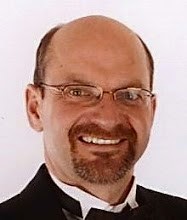
As many of my friends and most of my family will attest, this is dangerous ground. Ed "thinking" is something to fear, as I understand it, because it is pretty unpredictable in terms of conclusions and even communication. As in "how the hell did you come up with that" or "come again, I didn't follow you there." So be it. Just be thankful that you only have to endure this every once in a while. For me, it's 24/7/365.25, thankyouverymuch.
I have been reading compulsively these last few weeks. This is partly because I have more energy again, but it is also to find some answers. But, you ask, what are the questions? Ah, this is the rub - I am not sure what the questions ought to be these days. For the majority of 2007, I was submerged in a sea of anxiety, adrift in the impenetrable mists of interrupted normalcy, and too damned tired to reflect on the flotsam, jetsam, and general floating junk of living that whirled around me in that foggy ocean. So, I read. Fiction (fantasy, sci-fi, alternate histories, and historical) and non-fiction (predictive global warning, DNA, food manufacturing) - all set to distract me from the here-and-now, I guess. Questions like... what causes a cancer to develop and take hold in one's colon, or breast, or lung, are there any probably-cancer-causing variables that I should try to control (and which ones are random), should I further change some aspect of my daily "living" to enhance my chances of celebrating a longer life? Big questions.
And little questions too... should I walk to work in the sub-freezing temperatures of mid-January (improving my strength and energy, but possibly damaging sensitive and re-growing nerves in my hands and feet)? When is the right time to visit my general practitioner to "check-in" - she did not hesitate to suggest the colonoscopy that ultimately led to my new world, and I think she deserves to hear about my progress, but I am still on the clinical trial follow-up schedule and maybe another doctor visit isn't needed? And how important is that self-accumulating pile of paper on my desk, anyhow?
Work is another sticky dilemma. Some days it feels like the work challenge is really no different from being a cancer survivor. In both situations, we are trying to move past old habits by way of a new reality into a new organization of living - and we are struggling mightily without a roadmap. In both situations, we need a re-established baseline of "facts" upon which we can rely. And where does that baseline come from? How the heck do I know... but I know that I need it.
I am continuing with my exercise program - three days a week, for about 30 minutes each session so far. I am sleeping OK, if you can ignore the constantly tingling (to the point of annoyance) in both feet. Oh, and the flatulence! Woo-wee, that's a real stinky place these days. But is it my diet, or am I still readjusting internally to the lower abdominal resection of April, 2007? I won't go into any further detail, but the resolution of that surgical procedure can take as long as 18-24 months... and that does not seem to include any complicating realities forced onto the situation by five months of chemo-therapy.
Just thinkin'. Lots of questions, no apparent answers yet. Just thinkin'.
Saturday, January 26, 2008

Friday, January 18, 2008
PowerPort surgery redux
It's been about six hours since I became "port-free" and my chest hurts a little. Actually, it doesn't so much hurt as it itches. You know what I mean, that kind of incessant itching that you just can't scratch? Not quite as bad as a mosquito bite itch, but pretty bad... By pressing on the bandage, though, I can at least ease the itching for a bit. But I am ahead of myself here, in that you are missing some essential details.
My appointment for port-removal was scheduled for 2pm - suffice it to say that Dr-time and my watch did not coincide today. By 2:30, though, I was sitting on a paper-lined table, awaiting the surgeon. I was simply instructed to remove my shirts and sit. The wait was not too long, and in walked the doctor and his nurse. We chatted about the time that had elapsed since my last visit (June 1st, when he put the port in), and about raising kids and the next thing I knew I was lying back on the table, with a blue cloth draped over my chest and betadine-colored skin. He told me that he was ready to go and that there might be a pinprick (I mentioned that the needle he was using could not come close to the weekly port accessing needles, and the blood draws, and what-not). After a few minutes for the local anaesthetic to take effect, he grabbed his scalpel and started to incise.
Very surreal. We are still chatting about the day-to-day, but I can see the entire surgical progress reflected in his glasses. Blood wells up a little at the incision site, which he deftly dabs away with a sponge. I then ask if I am supposed to feel the knife cutting through my skin... and he asks if it hurts. I respond, "no, but I can feel the knife cutting through the skin." He chooses to inject a little more anaesthetic, and then I feel no cutting. Those nerves are so easy to trick into silence, aren't they?
He works away at liberating the port from under my skin, even to the point of more work with the scalpel, and finally announces that it is free (imagine a lot of tugging and squeezing). "Ready for me to pull the tube out?," he asks. Being in the position I was, I immediately said sure and he gently pulled the (surprisingly short) tube out of my chest. He asked if I wanted it, saying I had bought it and it was mine to keep... so I am now the proud owner of a used PowerPort. Of course, with these devices as soon as you drive them off the lot they lose all value to anyone else, so I can't even try eBay... Ten minutes of subcutaneous suturing later (skin has some superglue and tape on it, sutures will dissolve in a few weeks), all is done.
Tomorrow I get to remove the bandage and take a shower. After next Wednesday (five days post-surgery) I can do upper-body workouts again. The last vestige of my colonic cancer treatment experience is history, and now we only have to endure and resolve the periodic examinations for the next gazillion seconds or so...
This is a good thing.
My appointment for port-removal was scheduled for 2pm - suffice it to say that Dr-time and my watch did not coincide today. By 2:30, though, I was sitting on a paper-lined table, awaiting the surgeon. I was simply instructed to remove my shirts and sit. The wait was not too long, and in walked the doctor and his nurse. We chatted about the time that had elapsed since my last visit (June 1st, when he put the port in), and about raising kids and the next thing I knew I was lying back on the table, with a blue cloth draped over my chest and betadine-colored skin. He told me that he was ready to go and that there might be a pinprick (I mentioned that the needle he was using could not come close to the weekly port accessing needles, and the blood draws, and what-not). After a few minutes for the local anaesthetic to take effect, he grabbed his scalpel and started to incise.
Very surreal. We are still chatting about the day-to-day, but I can see the entire surgical progress reflected in his glasses. Blood wells up a little at the incision site, which he deftly dabs away with a sponge. I then ask if I am supposed to feel the knife cutting through my skin... and he asks if it hurts. I respond, "no, but I can feel the knife cutting through the skin." He chooses to inject a little more anaesthetic, and then I feel no cutting. Those nerves are so easy to trick into silence, aren't they?
He works away at liberating the port from under my skin, even to the point of more work with the scalpel, and finally announces that it is free (imagine a lot of tugging and squeezing). "Ready for me to pull the tube out?," he asks. Being in the position I was, I immediately said sure and he gently pulled the (surprisingly short) tube out of my chest. He asked if I wanted it, saying I had bought it and it was mine to keep... so I am now the proud owner of a used PowerPort. Of course, with these devices as soon as you drive them off the lot they lose all value to anyone else, so I can't even try eBay... Ten minutes of subcutaneous suturing later (skin has some superglue and tape on it, sutures will dissolve in a few weeks), all is done.
Tomorrow I get to remove the bandage and take a shower. After next Wednesday (five days post-surgery) I can do upper-body workouts again. The last vestige of my colonic cancer treatment experience is history, and now we only have to endure and resolve the periodic examinations for the next gazillion seconds or so...
This is a good thing.
Thursday, January 17, 2008
What's next?
Well, that's quite the question I am struggling with these days. I am feeling pretty good, and my strength is slowly returning. I am working on two short-term goals with my exercise trainer - a skiing weekend in March, and a 40-mile bicycle ride (this year's LiveStrong Challenge) in June. I wonder if this is my new reality, or if this is just a lull in the cancer storm?
The tingling remains - fingertips and the soles of my feet. Cold temperatures make the tingling quite painful (and thus I am glad to live in the mild Willamette Valley during the winter), and holding cold objects is something I approach carefully. And the toxic flatulence continues (not that you asked!) But I feel like I am sleeping better, and that is quite a big deal.
Oh. Tomorrow I get my PowerPort removed. I must admit to a little apprehension about this procedure, as I am told that it is done in the surgeon's office with a local anaesthetic... As you will recall, the port is just under my skin on my upper-right chest, and there is a catheter tube that goes from the subcutaneous port chamber into a vein under my clavicle and into the superior vena cava just above my heart. During the removal process, I imagine a cut will be made through my skin, and the chamber will then be removed along with the catheter tube. As I will be awake during the whole procedure, I also imagine that there will be some tugging and then the tube will pop out of the clavicular vein and be out... but I do not have a clear understanding of what happens with the little hole that must then appear in that vein (where the tube used to pass in). I guess my logical curiosity is just going to have to await the outcome...
More tomorrow...
The tingling remains - fingertips and the soles of my feet. Cold temperatures make the tingling quite painful (and thus I am glad to live in the mild Willamette Valley during the winter), and holding cold objects is something I approach carefully. And the toxic flatulence continues (not that you asked!) But I feel like I am sleeping better, and that is quite a big deal.
Oh. Tomorrow I get my PowerPort removed. I must admit to a little apprehension about this procedure, as I am told that it is done in the surgeon's office with a local anaesthetic... As you will recall, the port is just under my skin on my upper-right chest, and there is a catheter tube that goes from the subcutaneous port chamber into a vein under my clavicle and into the superior vena cava just above my heart. During the removal process, I imagine a cut will be made through my skin, and the chamber will then be removed along with the catheter tube. As I will be awake during the whole procedure, I also imagine that there will be some tugging and then the tube will pop out of the clavicular vein and be out... but I do not have a clear understanding of what happens with the little hole that must then appear in that vein (where the tube used to pass in). I guess my logical curiosity is just going to have to await the outcome...
More tomorrow...
Saturday, December 29, 2007
CT scan results - verbatim
For those of you that have not had the opportunity to undergo a CT scan, it is not the most unpleasant diagnostic examination that you can experience. CT is the abbreviation for "Computed axial Tomography," which is sometimes referred to as "CAT," and it is basically an x-ray machine that spins around your body continuously recording digital data about your insides. It takes about five minutes, once you have ingested two quarts' worth of barium sulfate milkshakes over an hour (I chose the vanilla over the berry flavor) and are injected with an additional IV contrast agent (iodine-based, clear solution) during the scan itself. My PowerPort was accessed for this IV, making the whole process pretty straightforward. The oral contrast (barium sulfate) makes it easier to identify the stomach and intestines, and the IV contrast (iodine) makes it easier to "see" my blood vessels and heart. Both contrast agents are eliminated by my liver and kidneys. By the way, the IV contrast agent makes you feel warm inside (one CT technician warned me that it might make me feel like I'd wet my pants - but my experience was more of a warm, metallic tongue first and then a very slightly sweaty sensation spreading down my body and then up into my head). Then the table that I was laying on slides into a circular tunnel (not claustrophobic at all), the scanner starts to slowly spin around me, and a feminine machine voice says, "Breathe in and hold your breath." The table slowly slides out of the machine, and the voice says, "Breathe." It's good to be reminded to breathe every so often. And now we're all done.
Except for the waiting.
Since I am meeting with my oncologist on Wednesday next week and need to take the imagery/results with me, I asked the CT technician when the scan results would be available. He said that I could pick up the digital imagery immediately (since it is digital and all!), but that the radiologist would not look at the images until later that day. So I picked up the imagery and final report the next afternoon, and here is what it says [comments in square brackets are mine]:
HISTORY: Followup colon cancer in a 46-year-old male. He was initially diagnosed in March 2007. He underwent surgical resection in June 2007 [actually, the surgery was in April 2007, and chemo began in June]. Since that time, he has been treated with chemotherapy.
PROCEDURE: Following administration of oral and IV contrast, axial 5mm images were obtained from the lung apices [plural of apex - the top of the lungs] through the symphysis pubis [just below the bladder, basically].
FINDINGS: The lungs remain clear. No developing mass or nodule seen in either lung. No local infiltrate is present bilaterally [I believe that this is a redundant sentence, given the one immediately preceding it, but it might mean that the radiologist did not see any symmetrical "features" that should not be there]. No pleural effusion [excess fluid in the space around the lungs] is present bilaterally and no pericardial effusion [fluid around the heart] is seen. No areas of pleural thickening [increase in the width of the pleura - the lining of the sac that surrounds the lungs] are identified. No developing adenopathy [large/swollen lymph nodes] is seen within the chest. Heart size is normal [whew!].
The liver is normal in size. Numerous small low density nodules are again seen throughout the liver, which measure up to a maximum of about 11mm. All of these nodules were seen on the prior study from 5/22/2007 and appear stable in size and number. No enlarging or new mass is seen within the liver. The gallbladder, bile ducts, and pancreas appear normal. The spleen is normal in size. A tiny low density nodule [this usually means "fluid-filled" and is not cancerous] is seen on image 51, measuring about 6mm. This was present on the study from 5/22/2007 and has diminished in size. Adrenal glands and kidneys appear normal.
Postsurgical changes are present within the pelvis. A suture line is noted at the rectosigmoid junction [where the rectum connects with the large intestine] compatible with partial colonic resection [the surgery I had]. The remaining colon appears unremarkable [my new favorite diagnostic word!]. No areas of bowel wall thickening are seen. Small bowel appears unremarkable. No dilated bowel loops are present. No developing adenopathy is seen within the abdomen or pelvis. No ascites [accumulation of fluid in the peritoneal cavity - basically the area below your lungs and above your crotch] is present. Bladder appears unremarkable.
IMPRESSION:
1. No evidence for developing metastatic disease or recurrent neoplastic disease within the chest, abdomen, and pelvis.
2. Clear lungs.
3. Stable appearance and number of multiple small low density nodules in the liver. A prior ultrasound was performed on 3/29/2007, showing these to represent cysts. No new or enlarging mass is seen within the liver.
4. No developing adenopathy is seen within the chest, abdomen, and pelvis.
5. Postsurgical changes related to partial distal [toward the end] colon resection. Area of anastomosis [the site of the surgical reconnection of the two parts of my colon] appears unremarkable, without developing wall thickening. No adenopathy is seen within this region.
6. No ascites is present.
7. Tiny nonspecific low density nodule is seen at the anterior margin of the spleen, diminished in size when compared with the study on 5/22/2007.
So, with the caveat that I have not spoken to my oncologist yet, I think this CT scan result bespeaks quite good news. Thanks for your interest and attention, and you will now be returned to your regularly scheduled programming....
Except for the waiting.
Since I am meeting with my oncologist on Wednesday next week and need to take the imagery/results with me, I asked the CT technician when the scan results would be available. He said that I could pick up the digital imagery immediately (since it is digital and all!), but that the radiologist would not look at the images until later that day. So I picked up the imagery and final report the next afternoon, and here is what it says [comments in square brackets are mine]:
HISTORY: Followup colon cancer in a 46-year-old male. He was initially diagnosed in March 2007. He underwent surgical resection in June 2007 [actually, the surgery was in April 2007, and chemo began in June]. Since that time, he has been treated with chemotherapy.
PROCEDURE: Following administration of oral and IV contrast, axial 5mm images were obtained from the lung apices [plural of apex - the top of the lungs] through the symphysis pubis [just below the bladder, basically].
FINDINGS: The lungs remain clear. No developing mass or nodule seen in either lung. No local infiltrate is present bilaterally [I believe that this is a redundant sentence, given the one immediately preceding it, but it might mean that the radiologist did not see any symmetrical "features" that should not be there]. No pleural effusion [excess fluid in the space around the lungs] is present bilaterally and no pericardial effusion [fluid around the heart] is seen. No areas of pleural thickening [increase in the width of the pleura - the lining of the sac that surrounds the lungs] are identified. No developing adenopathy [large/swollen lymph nodes] is seen within the chest. Heart size is normal [whew!].
The liver is normal in size. Numerous small low density nodules are again seen throughout the liver, which measure up to a maximum of about 11mm. All of these nodules were seen on the prior study from 5/22/2007 and appear stable in size and number. No enlarging or new mass is seen within the liver. The gallbladder, bile ducts, and pancreas appear normal. The spleen is normal in size. A tiny low density nodule [this usually means "fluid-filled" and is not cancerous] is seen on image 51, measuring about 6mm. This was present on the study from 5/22/2007 and has diminished in size. Adrenal glands and kidneys appear normal.
Postsurgical changes are present within the pelvis. A suture line is noted at the rectosigmoid junction [where the rectum connects with the large intestine] compatible with partial colonic resection [the surgery I had]. The remaining colon appears unremarkable [my new favorite diagnostic word!]. No areas of bowel wall thickening are seen. Small bowel appears unremarkable. No dilated bowel loops are present. No developing adenopathy is seen within the abdomen or pelvis. No ascites [accumulation of fluid in the peritoneal cavity - basically the area below your lungs and above your crotch] is present. Bladder appears unremarkable.
IMPRESSION:
1. No evidence for developing metastatic disease or recurrent neoplastic disease within the chest, abdomen, and pelvis.
2. Clear lungs.
3. Stable appearance and number of multiple small low density nodules in the liver. A prior ultrasound was performed on 3/29/2007, showing these to represent cysts. No new or enlarging mass is seen within the liver.
4. No developing adenopathy is seen within the chest, abdomen, and pelvis.
5. Postsurgical changes related to partial distal [toward the end] colon resection. Area of anastomosis [the site of the surgical reconnection of the two parts of my colon] appears unremarkable, without developing wall thickening. No adenopathy is seen within this region.
6. No ascites is present.
7. Tiny nonspecific low density nodule is seen at the anterior margin of the spleen, diminished in size when compared with the study on 5/22/2007.
So, with the caveat that I have not spoken to my oncologist yet, I think this CT scan result bespeaks quite good news. Thanks for your interest and attention, and you will now be returned to your regularly scheduled programming....
Wednesday, December 26, 2007
Respite
Hello. Remember me? I've been "off-blog" for nearly a month now, and have been feeling more and more guilty about that. So, where have I been, you ask? Well, I have been wallowing in the distraction of not having any more chemo-therapy to endure. I have been swimming in the warm waters of a slowly healing body, experiencing the flavors of beer, wine, scotch, and ethnic foods as often as possible. In short, I have been trying to reclaim some semblance of normalcy at the end of Ed's cancer-year.
My fingertips tingle a bit all the time, but especially when I exert any pressure with them (like typing) - and I have a lot of trouble with the collar buttons on my work shirts each morning. I mistrust my fine finger coordination, and have found that I drop things more often than I think I should. My feet tingle constantly too - and this is especially difficult at night (when I think that my feet are extremely cold but they are just, ummmm, tingling).
I would say, though, that getting *away* from cancer-world is virtually impossible. My family and I went on a very relaxing cruise in the Eastern Caribbean. We enjoyed warm weather, calm seas, wonderful meals and no responsibilities for seven straight days. We enjoyed each other's company as well as the companionship of several hundred strangers, and were treated royally by the staff and crew of the Celebrity Millennium. We frolicked on tropical beaches, we enjoyed the massages, the tropical fishes, and the shopping in far-off ports. In short, we had a lot of fun. But I couldn't seem to shake the nagging feeling that my world is still shifted from the *way it was*. My port is still bulging out of my upper-right chest, and I know I have a CT scan tomorrow and an appointment with my oncologist next Wednesday.
Respite - a break from the way things are - is essential. "Vacation" is an Americanism that I have never found to encourage relaxation. I tend to try to force too much *stuff* into too little time, and end up stressing out about the content of that time. This cruise ended up being a great respite for me, but only after a couple days' worth of stress about spending money and over-planning daily activities. I am so glad that we went, and glad for the companionship of my wife, my daughter, and my brother-in-law... and for the anonymity of cruising with strangers. Sometimes getting away from "it all" is impossible, but we managed to get away from most of it. And for this I am most grateful!
My fingertips tingle a bit all the time, but especially when I exert any pressure with them (like typing) - and I have a lot of trouble with the collar buttons on my work shirts each morning. I mistrust my fine finger coordination, and have found that I drop things more often than I think I should. My feet tingle constantly too - and this is especially difficult at night (when I think that my feet are extremely cold but they are just, ummmm, tingling).
I would say, though, that getting *away* from cancer-world is virtually impossible. My family and I went on a very relaxing cruise in the Eastern Caribbean. We enjoyed warm weather, calm seas, wonderful meals and no responsibilities for seven straight days. We enjoyed each other's company as well as the companionship of several hundred strangers, and were treated royally by the staff and crew of the Celebrity Millennium. We frolicked on tropical beaches, we enjoyed the massages, the tropical fishes, and the shopping in far-off ports. In short, we had a lot of fun. But I couldn't seem to shake the nagging feeling that my world is still shifted from the *way it was*. My port is still bulging out of my upper-right chest, and I know I have a CT scan tomorrow and an appointment with my oncologist next Wednesday.
Respite - a break from the way things are - is essential. "Vacation" is an Americanism that I have never found to encourage relaxation. I tend to try to force too much *stuff* into too little time, and end up stressing out about the content of that time. This cruise ended up being a great respite for me, but only after a couple days' worth of stress about spending money and over-planning daily activities. I am so glad that we went, and glad for the companionship of my wife, my daughter, and my brother-in-law... and for the anonymity of cruising with strangers. Sometimes getting away from "it all" is impossible, but we managed to get away from most of it. And for this I am most grateful!
Sunday, December 2, 2007
Toxic clouds with silver linings
OK. I was scheduled to get my 11th (and last) treatment last Thursday. At the previous monthly appointment with my doctor, we had talked about the endgame for my chemo-therapy, and had agreed that the "final" (12th) treatment could be avoided. (Given that my family has had a special vacation planned for December to celebrate the end of chemo, I had decided that I did not want to spend any vacation time feeling chemo-crummy.) So, #11 on November 29 would be the last one... if my blood work was OK. On the 28th I had a blood test to see if the trip to Portland was even needed (this after a reduced dosage of both oxaliplatin and fluorouracil during treatment #10 AND five injections of neupogen to encourage the growth of white cells and neutrophils). The results were mixed (WBC was too low - 2.7 when I need at least 3.0 - while the ANC was a protocol-minimum 1.5), so we decided that it was worth the trip on the 29th.
No go. The blood work up at the clinic in Portland was significantly different from the previous day's test results. WBC was a 2.1 and ANC was 1.3, both far too low to withstand the impact of chemo-therapy. No treatment #11 (unless I want to, ummm, come back a week later for another roll of the bloodwork dice). No thank you, really. I did not get treatment #11, and #12 is off the calendar completely. I need to enjoy this vacation, and I want my family to be able to enjoy it even more. Being tired, and cranky-stinky - well, that doesn't sound like a fun guy to be (or be with) on a vacation. So, the chemo-therapy part of this colon cancer thing is over! But, what about the implications for my "cure" probability?
I am not qualified in any medical sense to speak authoritatively on that question. But, ten solid treatments are under my proverbial belt, though there have been three increasingly difficult delays. Peripheral neuropathy on the rise, even with decreasing dosages. I trust that my body has been hammered pretty hard by this treatment regimen, and that it is telling me that it has had enough. And everyone is different - on so many levels - that the prescribed length and dosage of treatment must be a variable that is flexible. The toxicity of the chemicals used to treat cancer is intentional, in order to wipe out those hypothetically "fast-growing" cancer cells. My body has been surprisingly strong in dealing with the bi-weekly introduction of liquid poison. My fingertips and feet tingle all the time, and I am very sensitive to cold and heat. My insides are producing gases that should not EVER be released in an enclosed space. And the high fatigue right after treatment had extended from 4 days to about 6 days... and now all of that is only going to improve!
Every day is a day closer to a new normalcy, without the added mental weight of anticipating negative blood counts or the infusion of toxic chemistry. I can work on strength recovery, and look forward to daily walks to work. And the vacation is just around the corner.
Now that's a silver lining.
(PS - the next step is a CT scan on December 27th to check the status of my insides (basically looking for anything unusual) followed by a post-chemo appointment with my oncologist in early January and a colonoscopy later in the spring.)
No go. The blood work up at the clinic in Portland was significantly different from the previous day's test results. WBC was a 2.1 and ANC was 1.3, both far too low to withstand the impact of chemo-therapy. No treatment #11 (unless I want to, ummm, come back a week later for another roll of the bloodwork dice). No thank you, really. I did not get treatment #11, and #12 is off the calendar completely. I need to enjoy this vacation, and I want my family to be able to enjoy it even more. Being tired, and cranky-stinky - well, that doesn't sound like a fun guy to be (or be with) on a vacation. So, the chemo-therapy part of this colon cancer thing is over! But, what about the implications for my "cure" probability?
I am not qualified in any medical sense to speak authoritatively on that question. But, ten solid treatments are under my proverbial belt, though there have been three increasingly difficult delays. Peripheral neuropathy on the rise, even with decreasing dosages. I trust that my body has been hammered pretty hard by this treatment regimen, and that it is telling me that it has had enough. And everyone is different - on so many levels - that the prescribed length and dosage of treatment must be a variable that is flexible. The toxicity of the chemicals used to treat cancer is intentional, in order to wipe out those hypothetically "fast-growing" cancer cells. My body has been surprisingly strong in dealing with the bi-weekly introduction of liquid poison. My fingertips and feet tingle all the time, and I am very sensitive to cold and heat. My insides are producing gases that should not EVER be released in an enclosed space. And the high fatigue right after treatment had extended from 4 days to about 6 days... and now all of that is only going to improve!
Every day is a day closer to a new normalcy, without the added mental weight of anticipating negative blood counts or the infusion of toxic chemistry. I can work on strength recovery, and look forward to daily walks to work. And the vacation is just around the corner.
Now that's a silver lining.
(PS - the next step is a CT scan on December 27th to check the status of my insides (basically looking for anything unusual) followed by a post-chemo appointment with my oncologist in early January and a colonoscopy later in the spring.)
Sunday, November 25, 2007
Ignorance and bliss...
I have not felt the need to "publicly" respond to any of the comments that I receive related to my posts has been necessary before. My general sense is that most comments are of the "keep your chin up" or "thanks for sharing" variety. And while I certainly appreciate the support that those type of comments provide, they have not caused me to want to post a response. However, three versions of one question were posted the other day related to one of my blog entries, and I feel somewhat compelled to pontificate...
"Do you feel your experience with cancer has been more difficult as an intellectually sound individual? Has the pro-active spirit made the journey mentally taxing as well as physically? I guess what I'm trying to say is do you sometimes feel others are fortunate with an ignorance is bliss attitude?"
First, I appreciate being called an "intellectually sound individual." Some days I am not so sure that's the case. :) But the question is still out there, and my experience with cancer is what this blog is all about. Yes, the journey HAS been damned difficult... and not only for me. Chemo-therapy and the odd mixture of side effect management drugs is very distracting on so many levels - but I have already blogged (ad nauseum - pun intended) about those issues. I regularly see the world through a different lens than I ever could have imagined using prior to becoming a member of the cancer club. But the idea of "more difficult" than some other person's journey troubles me. I am not sure that any one else's cancer journey is qualitatively comparable to mine, and I have a hard time imagining my new life journey (one, perhaps, dulled by drugs?) that is so different from the one that I am living. Every cancer treatment regimen is ultimately an experiment of one... an experiment that is statistically informed by the individual treatment "experiments" that preceded it. I am lucky to have been diagnosed now (as opposed to a decade ago), and to be otherwise healthy enough to handle the chemo-therapy. I'm not sure if that is a good answer to the gist of the question, but there it is.
So, let's consider the second approach to the question - about mental taxation and a pro-active spirit. (Again, my thanks to the comment-poster for the complimentary manner in which this question is raised.) I, "Mr. He-Who-Must-Analyze-Everything", cannot imagine being less active than I have been. But yes, that does add to the mental anguish I feel about the way that my experience of the world has changed. And by extension I am sure that the energy I devote to thinking about, researching, analyzing, questioning, and re-analyzing the details of my diagnosis and treatments is not available to my physical self. This begs another question/observation though: would I have it any other way (or perhaps more accurately, can I imagine myself not doing these things)? Not really. I am what I am (apologies to Popeye), and that means constantly re-examining what I know and what that means about my world. So, yes it is more taxing to be self-aware and proactive about my life as a cancer survivor than my life before the diagnosis - but only because I have a new reality to understand and embrace.
I am unsure how I should approach the last approach. "Ignorance is bliss" is one of those aphorisms that I only partially understand. I can accept that there are only so many issues or processes or whatever that one human mind can hold and consciously act upon. Can I really affect the abject poverty of sub-Saharan Africa - caused by centuries of tribal and colonial machinations layered atop environmental changes that transcend locale? What about the plight of homeless persons, with the multiple facets of modern existence that confound their ability to successfully interact with their own cultures? I am (selectively?) ignorant about the details of these situations as I work to handle the complications of a cancer in my life - and might consider that ignorance to be a kind of bliss. But applying that attitude to how one deals with a cancer diagnosis (or any other significant, life-threatening event) doesn't work so well for me. I cannot detach the analytical, proactive aspects of my "self" so as to be able to imagine how it might feel (better or worse) without those characteristics. And it is hard to imagine "not knowing" about a cancer (or the details of the diagnosis, prognosis, treatment, and recovery) as being somehow better than knowing... but that can only apply to me.
Cancer sucks. Period. There is really no blissful ignorance to wallow in once the "c" word enters your life. My friends and family have tolerated my somewhat compulsive, detail-oriented approach to colon cancer, and have encouraged me to find whatever way forward I need. I have been a cranky dude at times, and that has made it difficult for my nearest and dearest support group. On many occasions I have felt the need to apologize for unfortunate utterances (due to fatigue, or chemo-brain, or just plain tiredness). But soon, the transfusions will be finished and I will be moving back toward a "normal" life - whatever the hell that means.
So, the summary answer? Cancer is hard on everyone it touches, however directly or indirectly. Being proactive or hyper-analytical does not change that statement overmuch. We all struggle to decide how much we need to know about some aspect of our lives, and we make decisions based on the amount of information we feel is "enough." I am sure that there is a spectrum of "responses" to this line of questioning, and it's certainly possible that I am a statistical outlier. (I know some people that would argue that that "possibility" is close to 100% likely!) I feel lucky to be who and what I am, and to know that I can rely on a strong, supportive community for support. And that's what matters.
"Do you feel your experience with cancer has been more difficult as an intellectually sound individual? Has the pro-active spirit made the journey mentally taxing as well as physically? I guess what I'm trying to say is do you sometimes feel others are fortunate with an ignorance is bliss attitude?"
First, I appreciate being called an "intellectually sound individual." Some days I am not so sure that's the case. :) But the question is still out there, and my experience with cancer is what this blog is all about. Yes, the journey HAS been damned difficult... and not only for me. Chemo-therapy and the odd mixture of side effect management drugs is very distracting on so many levels - but I have already blogged (ad nauseum - pun intended) about those issues. I regularly see the world through a different lens than I ever could have imagined using prior to becoming a member of the cancer club. But the idea of "more difficult" than some other person's journey troubles me. I am not sure that any one else's cancer journey is qualitatively comparable to mine, and I have a hard time imagining my new life journey (one, perhaps, dulled by drugs?) that is so different from the one that I am living. Every cancer treatment regimen is ultimately an experiment of one... an experiment that is statistically informed by the individual treatment "experiments" that preceded it. I am lucky to have been diagnosed now (as opposed to a decade ago), and to be otherwise healthy enough to handle the chemo-therapy. I'm not sure if that is a good answer to the gist of the question, but there it is.
So, let's consider the second approach to the question - about mental taxation and a pro-active spirit. (Again, my thanks to the comment-poster for the complimentary manner in which this question is raised.) I, "Mr. He-Who-Must-Analyze-Everything", cannot imagine being less active than I have been. But yes, that does add to the mental anguish I feel about the way that my experience of the world has changed. And by extension I am sure that the energy I devote to thinking about, researching, analyzing, questioning, and re-analyzing the details of my diagnosis and treatments is not available to my physical self. This begs another question/observation though: would I have it any other way (or perhaps more accurately, can I imagine myself not doing these things)? Not really. I am what I am (apologies to Popeye), and that means constantly re-examining what I know and what that means about my world. So, yes it is more taxing to be self-aware and proactive about my life as a cancer survivor than my life before the diagnosis - but only because I have a new reality to understand and embrace.
I am unsure how I should approach the last approach. "Ignorance is bliss" is one of those aphorisms that I only partially understand. I can accept that there are only so many issues or processes or whatever that one human mind can hold and consciously act upon. Can I really affect the abject poverty of sub-Saharan Africa - caused by centuries of tribal and colonial machinations layered atop environmental changes that transcend locale? What about the plight of homeless persons, with the multiple facets of modern existence that confound their ability to successfully interact with their own cultures? I am (selectively?) ignorant about the details of these situations as I work to handle the complications of a cancer in my life - and might consider that ignorance to be a kind of bliss. But applying that attitude to how one deals with a cancer diagnosis (or any other significant, life-threatening event) doesn't work so well for me. I cannot detach the analytical, proactive aspects of my "self" so as to be able to imagine how it might feel (better or worse) without those characteristics. And it is hard to imagine "not knowing" about a cancer (or the details of the diagnosis, prognosis, treatment, and recovery) as being somehow better than knowing... but that can only apply to me.
Cancer sucks. Period. There is really no blissful ignorance to wallow in once the "c" word enters your life. My friends and family have tolerated my somewhat compulsive, detail-oriented approach to colon cancer, and have encouraged me to find whatever way forward I need. I have been a cranky dude at times, and that has made it difficult for my nearest and dearest support group. On many occasions I have felt the need to apologize for unfortunate utterances (due to fatigue, or chemo-brain, or just plain tiredness). But soon, the transfusions will be finished and I will be moving back toward a "normal" life - whatever the hell that means.
So, the summary answer? Cancer is hard on everyone it touches, however directly or indirectly. Being proactive or hyper-analytical does not change that statement overmuch. We all struggle to decide how much we need to know about some aspect of our lives, and we make decisions based on the amount of information we feel is "enough." I am sure that there is a spectrum of "responses" to this line of questioning, and it's certainly possible that I am a statistical outlier. (I know some people that would argue that that "possibility" is close to 100% likely!) I feel lucky to be who and what I am, and to know that I can rely on a strong, supportive community for support. And that's what matters.
Subscribe to:
Posts (Atom)