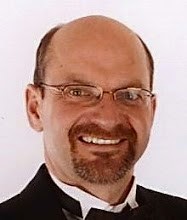
The other day I was walking to work, listening to my iPod, when Harry Chapin's "Story of a Life" shuffled its way to my earphones. In case you haven't heard it recently, Harry writes (and sings) of the twists and turns of a young man's life - much the same as Cat Stevens' Father and Son, though with a different flavor. And I have been reflecting (slowly, you might think) on the value and experience of blogging.
Huh? What's the connection here? How did we jump from classic folk songs to blogging without so much as a how-do-you-do? Well, my thinking goes something like this... (1) we all invent our lives every day in the choices that we make and the habits we confirm, (2) we tell those stories to ourselves and our world in the words we speak or write and the relationships that we reaffirm, (3) some of us publish those words (formally in print and informally on blogs and letters), and (4) others read those published works. A blog is nothing more than an un-refereed publication, and it can take on a virtual life of its own (caching is an enormously powerful force for being careful when it comes to writing things down - no real way to ever go "out-of-print").
Great. Now I think the connection is clear. What, no? Well I was once a young man, and sometimes I think that that young man still knocks around inside my biological cache... and there is *nothing* like a cancer diagnosis to wake you up to a lot of things about life. What were those dreams that I was so adamantly pursuing? And why, for goodness sake? And what really separates the fiction from the non-fiction in our lives?
This blog started out being a convenient means for communicating my immediate cancer-related feelings to a close group of people. To be a little more honest, though, it was a means of avoiding the many "replies" that a distributed emailing list generated when I was too tired to do much more than take pills and the occasional shower. I figured that there were people out there that might want to read of my experience - my reality - of being a cancer patient. But my reality was colored by the drugs, the emotions, the fatigue, and many other crayons. I struggle now to find meaningful words and topics to write about.
I have been avoiding the blog. I type comments on other cancer bloggers' sites - I know where they are in cancer-world (to a small extent) having been there myself... but am feeling almost unwelcome by my completion of my treatment. But I still fear - and that is my reality, a story of my life. I am sorry for the silence, because I think there are people checking in with my blog now and again - wondering about a cancer survivor's life. It's just that I feel like the story is now a lot more personal, you know? And I am not sure where to start...
Sunday, August 3, 2008

Saturday, July 5, 2008
New acronym - NEMD
I have to admit that I have been holding my metaphorical breath for a bit over a week now. On June 25th, I trooped over to my favorite outpatient center to have another CT scan - which we now realize was supposed to happen PRIOR to my six-month follow-up visit to OHSU. Long story short - the fact that my oncologist left OHSU to become a department head in Canada has created some turmoil in the details of my continued participation in clinical trial N0147, and calendars got shifted but key appointments did not. Oh well, this stuff happens.
Fast forward to July 3rd, where we find the hero of our story making a few phone calls to find out the results of the CT scan. Keep in mind that bad news related to cancer travels faster than the speed of light (translation: if there had been evidence of recurrence or metastasis, my phone would have rung the very next day (at the latest)), so I was not as concerned as someone might be in this situation. Still, I proceeded to call everyone that was supposed to have received the report from the latest CT scan, including OHSU, my local oncologist, and my primary care physician. None of them (not one) had seen any report whatsoever. Suffice it to say that, even given my sense of time as outlined above, this caused me some concern - but the story ends happily. The oncology nurse at OHSU promptly called the Imagery Department and had the report faxed to her. She then immediately called me back and read the report.
No evidence of metastatic disease (NEMD)! I have a few persistent cysts in my liver (apparently you do too - they are VERY common) that have not changed in size or position over the last six months. And that's it... from now on I am thinking that being labeled "NEMD" is as good as being "on the mend."
Live strong.
Fast forward to July 3rd, where we find the hero of our story making a few phone calls to find out the results of the CT scan. Keep in mind that bad news related to cancer travels faster than the speed of light (translation: if there had been evidence of recurrence or metastasis, my phone would have rung the very next day (at the latest)), so I was not as concerned as someone might be in this situation. Still, I proceeded to call everyone that was supposed to have received the report from the latest CT scan, including OHSU, my local oncologist, and my primary care physician. None of them (not one) had seen any report whatsoever. Suffice it to say that, even given my sense of time as outlined above, this caused me some concern - but the story ends happily. The oncology nurse at OHSU promptly called the Imagery Department and had the report faxed to her. She then immediately called me back and read the report.
No evidence of metastatic disease (NEMD)! I have a few persistent cysts in my liver (apparently you do too - they are VERY common) that have not changed in size or position over the last six months. And that's it... from now on I am thinking that being labeled "NEMD" is as good as being "on the mend."
Live strong.
Tuesday, July 1, 2008
LiveStrong Challenge 2008
I rode the 40 miles in just over two hours (2h07m) - about 18 mph... not bad for an old guy who was a lot weaker just six short months ago. We also saw Lance Armstrong all over the Nike campus. At about the 35-mile mark I noticed that my legs were markedly wobbly, but that could have been due to the heat too.
I promise to post a more prosaic description later this week, but everything seems to be conspiring against me having any energy/time at the end of the day this week... we are preparing for the annual July 4th feast-and-fireworks extravaganza.
I promise to post a more prosaic description later this week, but everything seems to be conspiring against me having any energy/time at the end of the day this week... we are preparing for the annual July 4th feast-and-fireworks extravaganza.
Tuesday, June 10, 2008
Normal?
So, not so long ago, here is the scoop...
Ed, bent over a stationary cycle machine (toe clips engaged, iPod playing some Tchaikovsky, sweat dripping), is trying to maintain some sort of training regime related to the LiveStrong Challenge. Outside the windows it is dark (mind you, it is 4:45pm), and I am attending a work conference in Orlando, FL. Lightning and thunder are trading exclamation points of light and sound, and there is a deluge engulfing the Marriott World Center Resort. I am sitting still but pedaling through the "random" hill course on a "Star Trac" cycle, and I am beginning to wonder if 45 minutes at level 10 (out of 20) was such a good idea. Oh, and did I mention that I had just spent 8 hours engaged in a training course related to "Enterprise Architecture"? Well, that too. I completed 12.2 virtual miles in 46 minutes.
Just over a year ago, I started chemotherapy for colo-rectal cancer that surprised the hell out of me and my family. Just over a year ago, I started working for the State of Oregon (again) as a policy analyst. Just over two weeks ago, my primary care physician said, "now that we are back into a normal health situation, we really ought to get an update on your cholesterol levels." THAT, I might venture to say, is a very good sign.
I like to think, occasionally, that I am a normal person (others may disagree, and they can just bite their proverbial tongues). But then I try to describe my line of work, which regularly leads to glazed-over eyes and a polite retreat. I am not sure that "enterprise architecture" is a more-simple response to the "so, what do you do?" question than "enterprise GIS collaboration and policy." So I am coming to terms with the idea that what I do is fairly esoteric, and not exactly prone to a simple description. For those that have known me for any length of time, this is not a significant change. For the rest of you, welcome to my world.
But I like to think that things are returning to normal - whatever that means. I am semi-seriously thinking that the kitchen DOES need to be remodeled, and there are some other house projects that we should think about - insulation for the attic and south walls sounds good, and what about a solar water heater? And an EA program for Oregon does not seem particularly far-fetched...
Normal - all the stuff you don't think about as important that really is.
Ed, bent over a stationary cycle machine (toe clips engaged, iPod playing some Tchaikovsky, sweat dripping), is trying to maintain some sort of training regime related to the LiveStrong Challenge. Outside the windows it is dark (mind you, it is 4:45pm), and I am attending a work conference in Orlando, FL. Lightning and thunder are trading exclamation points of light and sound, and there is a deluge engulfing the Marriott World Center Resort. I am sitting still but pedaling through the "random" hill course on a "Star Trac" cycle, and I am beginning to wonder if 45 minutes at level 10 (out of 20) was such a good idea. Oh, and did I mention that I had just spent 8 hours engaged in a training course related to "Enterprise Architecture"? Well, that too. I completed 12.2 virtual miles in 46 minutes.
Just over a year ago, I started chemotherapy for colo-rectal cancer that surprised the hell out of me and my family. Just over a year ago, I started working for the State of Oregon (again) as a policy analyst. Just over two weeks ago, my primary care physician said, "now that we are back into a normal health situation, we really ought to get an update on your cholesterol levels." THAT, I might venture to say, is a very good sign.
I like to think, occasionally, that I am a normal person (others may disagree, and they can just bite their proverbial tongues). But then I try to describe my line of work, which regularly leads to glazed-over eyes and a polite retreat. I am not sure that "enterprise architecture" is a more-simple response to the "so, what do you do?" question than "enterprise GIS collaboration and policy." So I am coming to terms with the idea that what I do is fairly esoteric, and not exactly prone to a simple description. For those that have known me for any length of time, this is not a significant change. For the rest of you, welcome to my world.
But I like to think that things are returning to normal - whatever that means. I am semi-seriously thinking that the kitchen DOES need to be remodeled, and there are some other house projects that we should think about - insulation for the attic and south walls sounds good, and what about a solar water heater? And an EA program for Oregon does not seem particularly far-fetched...
Normal - all the stuff you don't think about as important that really is.
Saturday, May 24, 2008
Challenges in life
As the aphorism says, you'll never know what you can do until you try. Or something like that... Over my short-but-not-so-short-anymore lifetime, I have approached and conquered or been defeated by many challenges. Some of them were silly little things like a lemonade stand business - where we had such great initial success (underwritten by a grant from Mom) only to find that the ingredients and transport time and a saturated customer base (everyone had already bought lemonade) and a cooler evening made for an overall negative income for that day. Others have been earthshakingly difficult - like writing a Master's thesis over the course of eight weeks one sultry, caffeinated summer in State College, or slogging through a toxic chemical haze toward the elimination of cancer.
Just last weekend the temperatures topped 100 degrees all around Oregon. Following a phenomenal snow season last winter, this led to some pretty impressive, snowmelt-fed stream flows. Nothing resembling a flood in our neck of the proverbial woods, but rivers and streams in the valley are much higher than they usually are in May. So I am out for an early morning training ride on my bicycle, and am riding on familiar bike paths adjacent to the Willamette River. The path is about four feet wide and is paved with asphalt. I am near the end of a roughly 15-mile ride, and at one of the dips in the path I come across about 15 feet of standing water (an inch or two deep), which I carefully ride through and think, "Hmmm... unusual." But thinking no more about it I ride on.
This path is a long double loop, and I am traveling on the outer loop - which means a long ride in either direction. As I am nearing the end of the loop, where it rejoins the road, I notice some more water over the path and begin to ride through it as before. This stretch of water-covered path is at least 50 feet long (it goes around a bend ahead), but my recent experience did not set off any alarm bells. It would be easier and faster to ride through the water than to turn around and ride back, and I did have to get ready for work.
Bad decision. In no time at all, I was pedaling through deep enough water that each foot submerged at the bottom of each pedal stroke. The grass-lined path winds between a farm field and a line of trees beside the slough, so I couldn't see very far ahead, but I knew where the path had to be even though it was submerged. It was too difficult to turn around without getting off the bike, which would mean disengaging my cleats underwater while trying to remain balanced. The drag of the water began to make pedaling really difficult, and the water was now almost as high as my knees. Feeling pretty dumb (and a little concerned), I needed to downshift to maintain my forward momentum. I feared that losing momentum would soon have me toppled over into the water, since my submerged feet would not allow my cleats to disengage quickly enough to let me step off the bike and stand up. With some trepidation, I reached down to shift gears (actually, this was no problem, as the water does not really affect mechanical devices that are well lubricated with grease) and then pedaled mightily against the added resistance of the water up the gentle slope toward the road. Soon enough, I was on dry path again, and was merely a little wetter than the sunny day would have generally caused.
I rode through knee deep water for a mere two hundred yards or so, but the time seemed to stretch on forever. I rose to this challenge, and my strengthening legs were more than a match for my underutilized brain (this time). It's a good feeling - finding yourself able to weather an unexpected challenge. And it was nice to know that some of the faith that I used to have in my body is returning. But, if you can avoid stuff like riding your bike through knee-deep water at the tail end of a fifteen mile ride, I suggest that you do so. It's much easier, safer, and faster, to just backtrack a little and ride around the obstacle.
Life sometimes throws us a curve ball. But it is nice to be pleasantly surprised when you not only swing at the pitch, you actually connect. You'll never know if you can hit that ball until you step up to the plate. And if you haven't already done so, consider a colonoscopy to check out the lower insides. Shaving off a polyp or two or finding a small something is FAR better than waiting and finding a larger something that then has surgical and oncological implications.
LiveStrong!
Just last weekend the temperatures topped 100 degrees all around Oregon. Following a phenomenal snow season last winter, this led to some pretty impressive, snowmelt-fed stream flows. Nothing resembling a flood in our neck of the proverbial woods, but rivers and streams in the valley are much higher than they usually are in May. So I am out for an early morning training ride on my bicycle, and am riding on familiar bike paths adjacent to the Willamette River. The path is about four feet wide and is paved with asphalt. I am near the end of a roughly 15-mile ride, and at one of the dips in the path I come across about 15 feet of standing water (an inch or two deep), which I carefully ride through and think, "Hmmm... unusual." But thinking no more about it I ride on.
This path is a long double loop, and I am traveling on the outer loop - which means a long ride in either direction. As I am nearing the end of the loop, where it rejoins the road, I notice some more water over the path and begin to ride through it as before. This stretch of water-covered path is at least 50 feet long (it goes around a bend ahead), but my recent experience did not set off any alarm bells. It would be easier and faster to ride through the water than to turn around and ride back, and I did have to get ready for work.
Bad decision. In no time at all, I was pedaling through deep enough water that each foot submerged at the bottom of each pedal stroke. The grass-lined path winds between a farm field and a line of trees beside the slough, so I couldn't see very far ahead, but I knew where the path had to be even though it was submerged. It was too difficult to turn around without getting off the bike, which would mean disengaging my cleats underwater while trying to remain balanced. The drag of the water began to make pedaling really difficult, and the water was now almost as high as my knees. Feeling pretty dumb (and a little concerned), I needed to downshift to maintain my forward momentum. I feared that losing momentum would soon have me toppled over into the water, since my submerged feet would not allow my cleats to disengage quickly enough to let me step off the bike and stand up. With some trepidation, I reached down to shift gears (actually, this was no problem, as the water does not really affect mechanical devices that are well lubricated with grease) and then pedaled mightily against the added resistance of the water up the gentle slope toward the road. Soon enough, I was on dry path again, and was merely a little wetter than the sunny day would have generally caused.
I rode through knee deep water for a mere two hundred yards or so, but the time seemed to stretch on forever. I rose to this challenge, and my strengthening legs were more than a match for my underutilized brain (this time). It's a good feeling - finding yourself able to weather an unexpected challenge. And it was nice to know that some of the faith that I used to have in my body is returning. But, if you can avoid stuff like riding your bike through knee-deep water at the tail end of a fifteen mile ride, I suggest that you do so. It's much easier, safer, and faster, to just backtrack a little and ride around the obstacle.
Life sometimes throws us a curve ball. But it is nice to be pleasantly surprised when you not only swing at the pitch, you actually connect. You'll never know if you can hit that ball until you step up to the plate. And if you haven't already done so, consider a colonoscopy to check out the lower insides. Shaving off a polyp or two or finding a small something is FAR better than waiting and finding a larger something that then has surgical and oncological implications.
LiveStrong!
Sunday, May 18, 2008
2008 LiveStrong Day
Hello Blog-land,
Last week was a very long week. Between the early morning bike rides and the long days, it felt like at least ten days over the course of the seven that actually passed. But the point of this blog is to talk about LiveStrong Day 2008 - which occurred on Tuesday last, and featured at least 50 people milling about our front yard and porch connecting with each other around the impact of cancer on our lives. We had doctors and nurses and representatives from cancer care facilities and a wonderful trainer (who specializes in helping cancer patients and survivors stay as physically active as possible) and friends and neighbors and people who are now friends and political campaign representatives and... well, a bunch of really neat and good folks.
My wife and her friend (breast cancer survivor) put it all together. Food and information were plentiful, but the main (and best) part was meeting other cancer patients and survivors that needed to know stuff. I don't claim to know everything, but in the process of dealing with my colon cancer I learned a lot and so had many other survivors. There's nothing like seeing and talking to others who have "been there" and who are still here to smile and laugh with you, and to suggest ideas, and to connect you with other info...
I am still recovering from the emotional and physical trauma of colon cancer - but that day was a long and wonderful day. The Lance Armstrong Foundation is working hard to make this topic a more central one, and we should be thankful for his work. I am.
Last week was a very long week. Between the early morning bike rides and the long days, it felt like at least ten days over the course of the seven that actually passed. But the point of this blog is to talk about LiveStrong Day 2008 - which occurred on Tuesday last, and featured at least 50 people milling about our front yard and porch connecting with each other around the impact of cancer on our lives. We had doctors and nurses and representatives from cancer care facilities and a wonderful trainer (who specializes in helping cancer patients and survivors stay as physically active as possible) and friends and neighbors and people who are now friends and political campaign representatives and... well, a bunch of really neat and good folks.
My wife and her friend (breast cancer survivor) put it all together. Food and information were plentiful, but the main (and best) part was meeting other cancer patients and survivors that needed to know stuff. I don't claim to know everything, but in the process of dealing with my colon cancer I learned a lot and so had many other survivors. There's nothing like seeing and talking to others who have "been there" and who are still here to smile and laugh with you, and to suggest ideas, and to connect you with other info...
I am still recovering from the emotional and physical trauma of colon cancer - but that day was a long and wonderful day. The Lance Armstrong Foundation is working hard to make this topic a more central one, and we should be thankful for his work. I am.
Monday, April 28, 2008
Things look (and feel) different now
So, as a cancer survivor, I sometimes find myself watching people and wondering. Wondering whether she has been thinking about how her bowels are working, or whether he even thinks about how efficient and effective his body is regulating the this-and-that of daily life. I find myself thinking about those taken-for-granted functions all the time. And with sincere apologies for the graphical picture I am about to paint, every bowel movement that I have (and believe me, they happen far too frequently) is a little adventure. Will it really feel like I've finished - that there is "no more coming", or will I sit and bear down, and bear down, and bear down, only to find that I wasn't as done as I'd thought. And what, pray tell, did I eat today that made that perfectly awful smell?? Can't really blame the chemo anymore, can I? I mean, it's been six months!
I know that I am one of the lucky ones. I (barely) had a tumor high enough to "save" my entire rectum and thus have no stoma to deal with every waking moment. I did not have radiation therapy - thus opening myself to a lifetime of potential side effects. And I have regained my weight and strength rather quickly. Can it be that last year at this time I was barely walking after major abdominal surgery?
We each walk through this life with our burdens, and our memories, and our trials. And the truth is that my trials are really no harder to bear than yours, or his, or hers. We all have those blasted trials. But I find that I am more tolerant these days, because things look and feel a LOT different this year.
And I, well, I really am thankful for that.
I know that I am one of the lucky ones. I (barely) had a tumor high enough to "save" my entire rectum and thus have no stoma to deal with every waking moment. I did not have radiation therapy - thus opening myself to a lifetime of potential side effects. And I have regained my weight and strength rather quickly. Can it be that last year at this time I was barely walking after major abdominal surgery?
We each walk through this life with our burdens, and our memories, and our trials. And the truth is that my trials are really no harder to bear than yours, or his, or hers. We all have those blasted trials. But I find that I am more tolerant these days, because things look and feel a LOT different this year.
And I, well, I really am thankful for that.
Subscribe to:
Posts (Atom)